
No Time For Pit Stops
Clock Speed, China Speed, Claude Speed


I watched Anthropic’s CFO being interviewed the other day. Krishna Rao was describing compute—chips, data centres, cloud contracts, training runs—and he called it the canvas on which everything else gets built. Except I realise that the canvas is being stretched while the paint is being applied, while the gallery is being redesigned, and the customer is arguing about what they commissioned.
When Rao joined Anthropic two years ago, revenue was about $250 million. He was told the plan was to reach a billion. His first instinct—the instinct of any seasoned finance executive—was to ask: in what year? That question, he now says, exposed the kind of linear thinking he had to unlearn quickly. April’26 revenues hit $4b or ARR ~$50 billion. Modeling for exponential growth is a different problem altogether.
That reminded me of a phrase I hadn’t heard in years: clock speed.
Charles Fine coined it about two decades ago to describe how different industries evolve at different rates—product cycles, process cycles, supply-chain cycles—each running its own clock. His insight wasn’t that things move fast. It was that they move at different speeds, and when those clocks fall out of sync, the system breaks.
I spent over three decades in modestly capital-intensive CPG businesses where the core discipline was balance—not leaning too far ahead of demand, not holding back too tightly.
Zara, the fast fashion retailer, excelled at this. Design to store shelf in two weeks. Fabric sourcing, cutting, stitching, logistics, store layout—all tuned to the same beat. The clocks were synchronised. That was their key advantage, not speed alone.
Novo Nordisk slipped badly recently. When Ozempic and Wegovy went from diabetes treatment to global weight-loss phenomenon, demand exploded. But manufacturing capacity couldn't sprint. The customer clock ran years ahead of the factory clock. Eli Lilly caught up. Novo had the product. What it didn't have was the synchronisation.
The frontier AI labs are all dealing with a much harsher version of this problem. Four clocks are running at vastly different speeds.
The customer clock is accelerating. Users are discovering new uses faster than anyone can map them. Demand is rocketing. The LLM makers are unable to predict demand even 3 months out with any accuracy.
The model clock—I call it the Claude Clock—is the research and release cycle: capability jumps, safety testing, the new version that makes yesterday’s use cases feel underpowered. Anyone who has watched a model go from impressive to also-ran in six weeks knows this vertigo. This clock is also accelerating.
The infra clock is the physical hardware. Chips, concrete, copper, cooling, electricity. For all the ethereal talk about intelligence, the race depends on hardware that takes years to plan and months to pour. Struggling to keep pace with the rocketing demands.
The society clock lurches and stalls. Governments, courts, workers, schools, investors, and public intellectuals do not move at one speed. Around them swirl doom narratives, utopian promises, bubble fears, and arguments about whether regulation will save innovation or strangle it. I’ve written about this dissonance before—the five men shaping the AI frontier, and the shape of this disruption. Slowest clock.
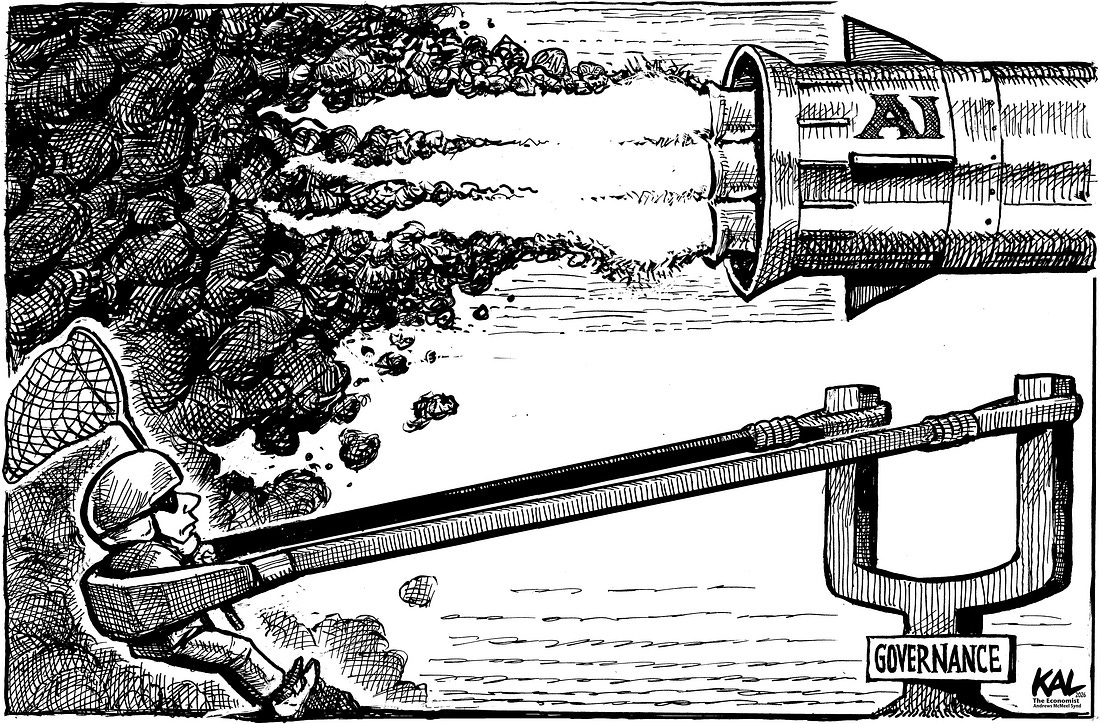
Now here is what makes AI different—not by degree, but by kind.
Zara’s clocks ran inside the fashion ecosystem. Novo’s ran inside pharma. AI’s clocks run across everything—coding, writing, tutoring, research, legal drafting, customer support, decision-making, and almost all knowledge work—all at once, all accelerating together. The capital committed to keeping the models humming is staggering. Hyperscalers will spend over seven hundred billion dollars this year on infra. They are buying and building capacity they cannot yet justify, driven less by forecasts than by the fear of being shut out.
The old spreadsheet had assumptions. This one has vibes, weather—and FOMO.
F1 comes to mind—fast, glamorous, full of telemetry. But F1 has fixed circuits, stewards, and rest days between races to recalibrate.
There are no pit stops in the AI race.
The closest industrial cautionary tale is China’s EV sector, which has achieved global domination at China speed—rapid launches, deep ecosystems, battery breakthroughs, fierce competition—with a concurrent set of problems: overcapacity, price wars, margin compression, suppliers squeezed into becoming unwilling financiers. Speed began as capability and became pathology. Once everyone learns to sprint, sprinting becomes the price of entry.1
Which brings me to something else that fascinates me about AI: the people inside these frontier labs.
What does it take to run an enterprise where a product upgrade ships every few weeks, the infra is being rebuilt even as you innovate, your customers are developing their own use cases, and governments haven’t decided whether you are a national champion or a national risk? How do you build and evolve organization culture when the ground moves so fast? How do you retain judgment—the slow, unglamorous, human kind—when everything rewards speed?
The early evidence is instructive. OpenAI’s fast-and-loose approach has resulted in loss of senior talent and scattered focus; Anthropic has fared better by staying more consistent, with fewer departures and a stronger reputation. But one underappreciated factor has helped all the labs: none have massively grown headcount. Model innovations have let them do far more with far fewer people—an accidental cultural gift, since the easiest way to destroy culture, under pressure, is to rapidly dilute it.
Culture rarely gets discussed. The labs talk about capability. They talk about safety. They rarely talk about the character of the decisions being made at these speeds—whether the leaders in the hot seat have the institutional habits and the ethical reflexes that hold up under vertigo. We have already seen, in Elon Musk’s long arc from visionary to cautionary tale, what happens when speed and capital and unchecked confidence compound in one person long enough. That trajectory is not the exception. It is what speed does to judgment when nothing pushes back.
The Buddhist monk, Thich Nhat Hanh tells the story of a rider galloping madly across a field. A bystander shouts: Where are you going? The rider yells back: I don’t know, ask the horse!
Speed is a clock. Judgment is a compass. A compass doesn’t care how fast you’re moving. It only knows whether you’re pointing somewhere worth going.
It is worth noting that China’s AI clocks may be better synchronised than America’s—a B2B focus steadies the customer clock, state-backed infra moves much faster, governance keeps pace. In America, the first two clocks are in runaway mode while the last two drag. More on the implications of this dynamic in a separate post.
Rajesh, your four-clock framing becomes even more interesting when viewed through replenishment velocity. The issue may not only be that the clocks are unsynchronised, but that AI cognition now replenishes faster than embodiment can absorb it. Models can produce code, designs, workflows, analysis and automation pathways at Claude Speed. But those outputs only become real power when they pass into chips, energy, factories, robots, workers, logistics, institutions and legitimacy.
In that sense, perhaps Aesop needs a small update. The tortoise and the hare no longer race to the finish line. They race to the banquet. Those who arrive late discover they were never guests. They were on the menu.
Zara was once the hare, until SHEIN changed the clock. Tesla looked like the electric hare, until BYD and China’s EV involution produced a field of faster, cheaper and differently adapted runners. One possible further risk for frontier AI is stranger still: it may move so fast through abstraction that it risks outrunning the banquet of real production itself.
When the replenishment velocity of AI cognition outpaces the replenishment velocity of embodiment, intelligence becomes abundant but use becomes bottlenecked. Speed without embodiment is not strategy. It is calorific burn.
Great post. I'm not convinced the model clock needs to keep rapid pace to keep the system functioning. We've reached a stage where the models are good enough for providing serious value. This is true for coding but also a lot of other white collar work. In my industry everyone relies on AI and this would continue even if capabilities stalled and stopped improving.
The Labs are competing for users and dominance so keep pushing to beat the benchmarks and gain the temporary crown, they also might reach agi eventually or not. But I believe we've reached a stage where there's enough ROI to justify their existence and reduce pressure on always achieving the same rate of progress.