
sand, really?
wandering wednesdays #148

We normally don’t think of sand very often. But what if I told you that sand has the résumé of an empire?
Yes, sand gets into your shoes, your sandwiches, your towels, and the floor mats of cars. It is what children happily build castles with and adults brush off with mild irritation. Nobody writes songs in its honour, unless they are trying to make a point about mortality. Nobody, on being given some sand, gasps the way they might at gold, oil, or even some newly fashionable rare earth rubble.
And yet the more I read about sand, the less I can relegate it merely to the category of beach bum accesory. Ed Conway, in Material World, begins his tour of modern civilization’s hidden scaffolding with sand. We think we live in a dematerialised age nowadays, floating on apps, algorithms, and other ethereal things. But much of this sleek and modern veneer begins in the dirt. Sand sits squarely at the very beginning of several of modernity’s most important advances: glass, concrete, fibre optics, and, through very pure silica, also silicon chips. The internet, that weightless realm of blogs, bank transfers, and unsolicited opinions, depends in no small measure on reheated sand.
And so … sand deserves a second look. Now look up at a tower block, then out through a window, then down at a phone screen, and you realise that much of our modern world is simply sand that has been transformed or bullied into greater ambition. We tend to describe modernity with flattering verbs: dreamed, designed, engineered, innovated. A less glamorous but equally accurate version might be melted, poured, compressed, polished. The sublime, it turns out, is just geology in a designer suit.
Conway’s broader argument is that a handful of raw materials have done far more to shape modern civilization than most of us realise, and sand is the first of these hidden overachievers. Iron is more solid, more visible. Oil has swagger. Lithium has paid publicists. Sand just lies there, looking inconsequential, while quietly holding up cities and carrying light under the oceans. The world uses 50 billion tonnes of sand and gravel each year, making it the second most exploited resource after water.
But facts and large numbers alone aren’t the full story. So, let me now bring in Annie Dillard, who is less interested in its usefulness and more in its metaphysical oddity. Her writing on sand widens quickly from the grain underfoot to older and stranger questions: why it gathers where it does, how it forms, what kind of time is stored inside it. A grain of sand is not just small. It is old in a way that mocks most of our categories. It is a mountain after several bad centuries. It is architecture after amnesia.
Concrete and glass are impressive enough, but Dillard nudges us toward a deeper astonishment. Sand is time you can pour through your fingers. It is the patient residue of erosion, collision, weather, pressure, salt, wind, and waves. It is what remains when solidity loses an argument with time. A beach is not merely a pleasant place to sit with sunglasses and a paperback. It is a field of broken histories.
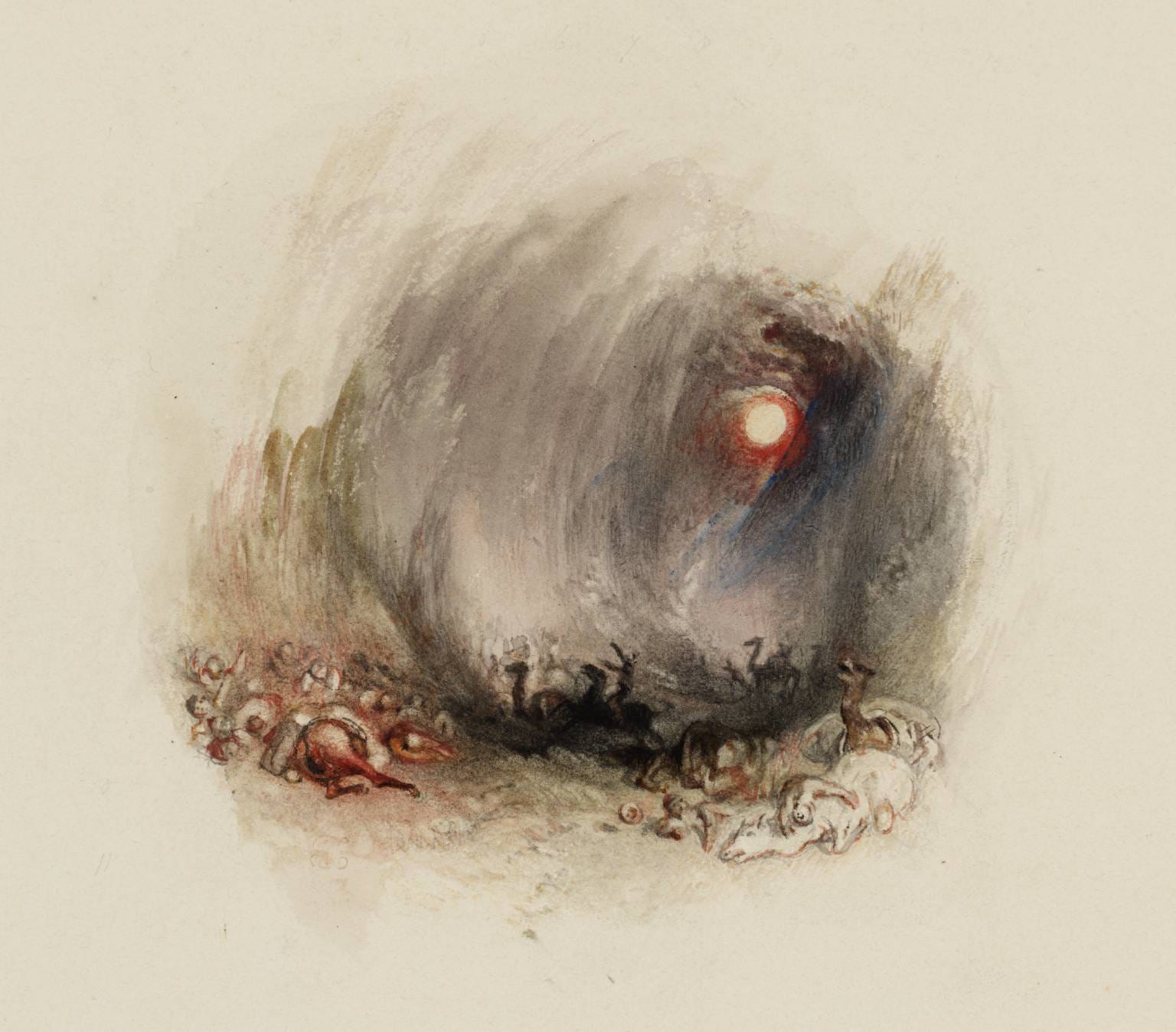
Perhaps this is why sand produces such a peculiar emotional effect. It is both trivial and immense. A grain is laughably small; a desert is overpowering. A child can kick it aside; a sandstorm can obliterate an army’s sense of direction. Turner’s feverish vision of a caravan caught in a sandstorm beneath a violent sky serves as an ominous reminder. Sand is not just passive material waiting to be useful. It also has moods. It drifts, buries, scours, blinds, invades. It is one of the few substances that is both humble and apocalyptic.
Sand is so ordinary that we assume it is limitless. Because it seems to be everywhere, we imagine it does not matter where it comes from. But it does. Our appetite for construction-grade sand has done real damage to rivers and coastal systems, and a sizeable illegal trade has grown around it. Which is perhaps the final indignity: one of civilization’s silent collaborators has also unwittingly become a target of one of its least glamorous crimes.
Conway and Dillard, in very different ways, performed the same magic trick on me. They took something insultingly familiar and returned it to the world charged with meaning. After reading them, sand no longer feels like backdrop. It feels like one of those silent contributors history forgot to thank.
Few things have done more for our civilization while receiving less credit than sand. I think you’ll agree with me.
I agree so much that I am left sandbagged. I have now woken up to a new reality where sand is the king. Thanks for illuminating us. Cheers
yes ✅Yes 🙌 YES 👍,MR.RAJESH ACHANTA—I “AGREE” 💯with you,that few things have done more for our civilization while receiving less credit than sand.
Rich in revelations . . . [MR.RAJESH’s] analogies in wandering wednesdays #148–sand, really?. . . Offers a fascinating lens on the résumé of SAND’s empire with intricacies of the modern supply chain(strange that we are running short of sand despite deserts) and the underappreciated science behind sand —one of the most ordinary everyday objects.
MR.RAJESH essay with facts & research from Conway and Dillard is [A] masterful exploration of the materials that underpin civilization including even several of modernity’s most important advances: glass, concrete, fibre optics, and, through very pure silica, also silicon chips.
In the book The World in a Grain,VINCE BEISER tells us Sand lies deep in our cultural consciousness. It suffuses our language. We draw lines in it, build castles in it, hide our heads in it. In medieval Europe (and a classic Metallica song), the Sandman helped ease us into sleep. In our modern mythologies, the Sandman is a DC superhero and a Marvel supervillain. In the creation myths of indigenous cultures from West Africa to North America, sand is portrayed as the element that gives birth to the land. Buddhist monks and Navajo artisans have painted with it for centuries. "Like sands through the hourglass, so are the days of our lives," intone the opening credits of a classic American soap opera. William Blake encouraged us to "see a world in a grain of sand." Percy Bysshe Shelley reminded us that even the mightiest of kings end up dead and forgotten, while around them only "the lone and level sands stretch far away." Sand is both minuscule and infinite, a means of measurement and a substance beyond measuring.
Building sandcastles is a classic beach activity that brings out creativity in kids (and adults!) of all ages. Sand Artist Sudarsan Pattnaik transforming Puri Beach into a massive canvas for detailed sculptures that address global social issues, humanitarian crises, and environmental awareness and is recipient of Padma Shri,Fred Darrington Sand Master Award,including a Guinness World Record for building the world’s tallest sandcastle,largest "Apple and Sand" Santa Claus installation.