
Meandering Incomplete
Wandering Wednesdays #128

In an information deluged world, curiosity is a guilt-free indulgence. You stumble across an interesting fact, follow a thread, discover connections you hadn’t imagined. But your attention and time are finite. You bookmark tabs, scribble notes, promise yourself you’ll return. Sometimes later never arrives.
This year I marked dozens of rabbit holes I never went down. Here are ten that still gnaw at me.
1
Our World in Data published a striking chart on road deaths across rich countries. The variation is staggering—more than twenty-fold between the safest and the most dangerous. I wasn’t surprised to find Singapore, where I live, among the safest roads in the world, alongside the UK, Sweden, and Norway. What did surprise me: several Middle Eastern countries—Saudi Arabia, Oman, the UAE—have fatality rates ten to twenty-four times higher than the safest nations, despite comparable wealth.
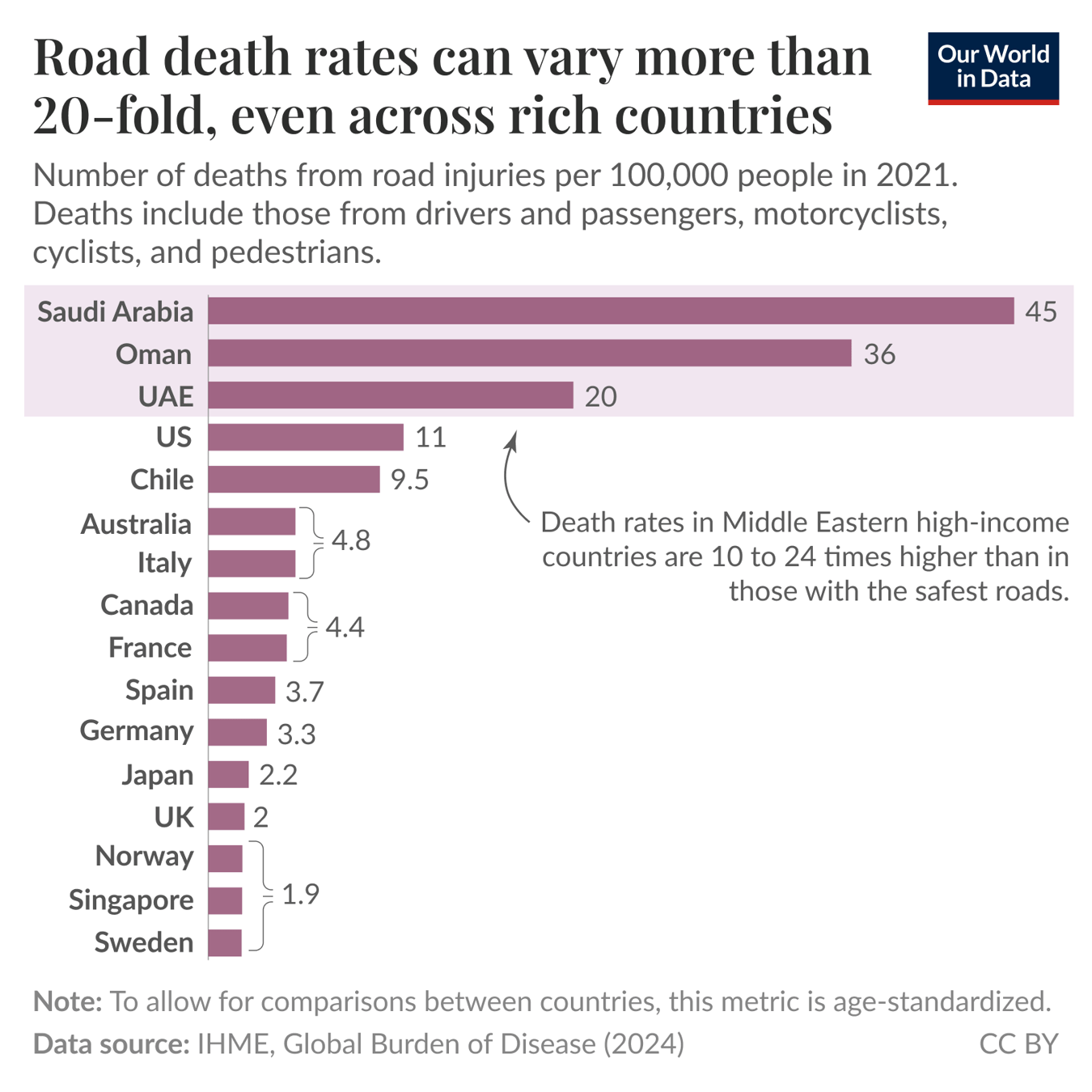
The explanation isn’t mysterious. These countries have extensive high-speed highway networks, drivers often cover far longer distances, and enforcement of basic safety regulations—speed limits, seatbelt use, distracted driving—remains weak. Death rates have declined in recent years, but the gap persists. Wealth alone doesn’t translate to safety. Infrastructure, culture, and enforcement matter more than GDP.
2
The Economist ran a chart showing GDP per capita across Indian states. The spread is remarkable: Telangana and Tamil Nadu have GDP per capita 4 - 5 times higher than Bihar and Uttar Pradesh. The bubbles(= population) make the disparity starker—hundreds of millions live in the poorest states, while the wealthiest states are comparatively small.
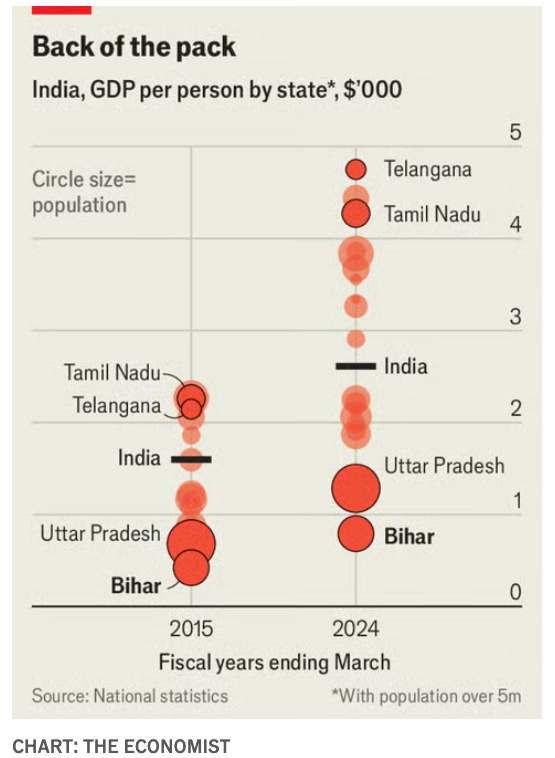
There’s endless clamor about inequality these days, but in rapidly growing developing countries like India, China, and Vietnam, rising inequality coexists with broad-based growth. Everyone benefits, even if some benefit more. Contrast this with the stagnant developed world—parts of Europe and the US—where absolute wealth is higher but growth has flatlined. Stagnation is the amphetamine of politics; growth is the opiate of the unequal.
3
Every culture has words for black and white. If a culture develops a third color word, it is always red. If it adds a fourth, it’s either yellow or green. This pattern holds across languages, geographies, and time periods. It’s not arbitrary—it reflects something fundamental about human perception and the salience of different colors in our environment. Blood, fire, sky, vegetation. The universal sequence suggests factors deeper than culture, rooted perhaps in biology or evolutionary pressures.
4
Robert Lawrence Kuhn has spent over two decades cataloguing theories of consciousness. His Closer to Truth website now lists 325 distinct theories. Not fringe speculation—these are serious attempts by philosophers, neuroscientists, and physicists to explain something utterly fundamental: how subjective experience arises from physical processes.
Three millennia of thinking about consciousness, and we still have only theories, no resolution. No other field sustains this level of legitimate pluralism. We’ve cracked the atom, sequenced the genome, photographed black holes. But the thing closest to us—our own awareness—remains stubbornly opaque. That Kuhn has dedicated decades to documenting this intellectual proliferation says something about the problem itself.
5
The moon landing was not a hoax, but the first human object launched into space might have been. It wasn’t Sputnik 1 in October 1957. It was a manhole cover accidentally blown off a test shaft during a nuclear test in Nevada thirty-eight days earlier. The steel cover, weighing several hundred pounds, was captured in one frame of high-speed camera footage, traveling at an estimated 125,000 miles/hour—about six times Earth’s escape velocity. It was never found.
Whether it actually made it to space or vaporized in the atmosphere remains unknown. Either way, the image is perfect: humanity’s first space launch was an accident involving a manhole cover and a nuclear bomb. We’ve gotten more deliberate since then, but not necessarily more dignified.
6
Tyler Vigen’s Spurious Correlations website dredges up random datasets and finds correlations between them. For instance, Google searches for funny cat videos correlate almost perfectly with the number of lawyers in the US. The relationship is meaningless, of course—a statistical artifact of time series data with similar trends.
But here’s the new twist: thanks to AI, each spurious correlation can now be instantly converted into an academic paper, complete with methodology, discussion, and citations. The technology makes entire categories of academic publishing redundant. If an algorithm can generate a plausible paper linking cat videos to lawyer fees, what exactly is the value proposition of niche academic work? I suspect we’re about to find out.
7
According to the Doomsday Scoreboard, there have been over 275 failed apocalypse predictions and zero successful ones. The track record is perfect—perfectly wrong. Yet each new prediction arrives with the same urgent certainty as the last. The Mayan calendar, Y2K, planetary alignments, blood moons, evangelical rapture dates. The pattern suggests something about human psychology, not cosmology. We crave narrative closure, definitive endpoints. The world’s actual messiness—its stubborn refusal to end on schedule—disappoints us.
When you hear about rogue AI or cyborgs getting us all in a few years, remember this scoreboard. You’ve been forewarned.
8
Trial by boiling water sounds like guaranteed conviction. Medieval Europeans accused of serious crimes had to plunge an arm into a bubbling cauldron and retrieve an object. Scalding indicated guilt; God knew all and revealed truth through ordeal. The chance of acquittal would seem to be zero.
Yet 60 % of defendants who underwent the ordeal were acquitted. Why? The guilty, believing God knew their crimes, confessed beforehand to avoid the extra punishment of scalding. The innocent, convinced God would vindicate them, refused to confess. The priests preparing the cauldron understood this dynamic. They didn’t want to undermine their authority by condemning someone who might later prove innocent. So they didn’t heat the water as much as they claimed.
Trial by ordeal functioned as a sorting mechanism, not a torture device. Game theory in clerical robes.
9
Members of all-male groups lie more frequently than groups that include both men and women. The effect is immediate: when the first woman joins an all-male group, the rate of dishonesty plummets. The research doesn’t fully explain why—whether it’s about performative masculinity, competitive dynamics, or something else—but the pattern is consistent. Diversity changes behavior, not through training or policy, but through presence. One person alters the equilibrium.
I think I understand why the tech industry behaves the way it does.
10
The AI boom will have winners and losers. That much is obvious. The problem is that everyone thinks they’ll be winners. Call centers, online tutors, corporate consultants: each sector plans to ride the AI wave to emerge on top, even when their business models are clearly vulnerable.
Expedia’s CEO says travellers still want a trusted partner—exactly what travel agents claimed before Expedia buried them. AI is Lake Wobegon with GPUs: every firm assumes it will be above average. John Steinbeck once wrote that socialism failed in America because the poor regard themselves as temporarily embarrassed millionaires. Today’s CEOs are like temporarily embarrassed billionaires, certain they’ll sack just enough workers to stay ahead of the curve and still emerge special.
History says otherwise; but optimism doesn’t care.
In Alice’s Adventures in Wonderland, the Cheshire Cat appears and vanishes at will, leaving only its grin behind. Well! I’ve often seen a cat without a grin, Alice remarks, but a grin without a cat! It’s the most curious thing I ever saw.
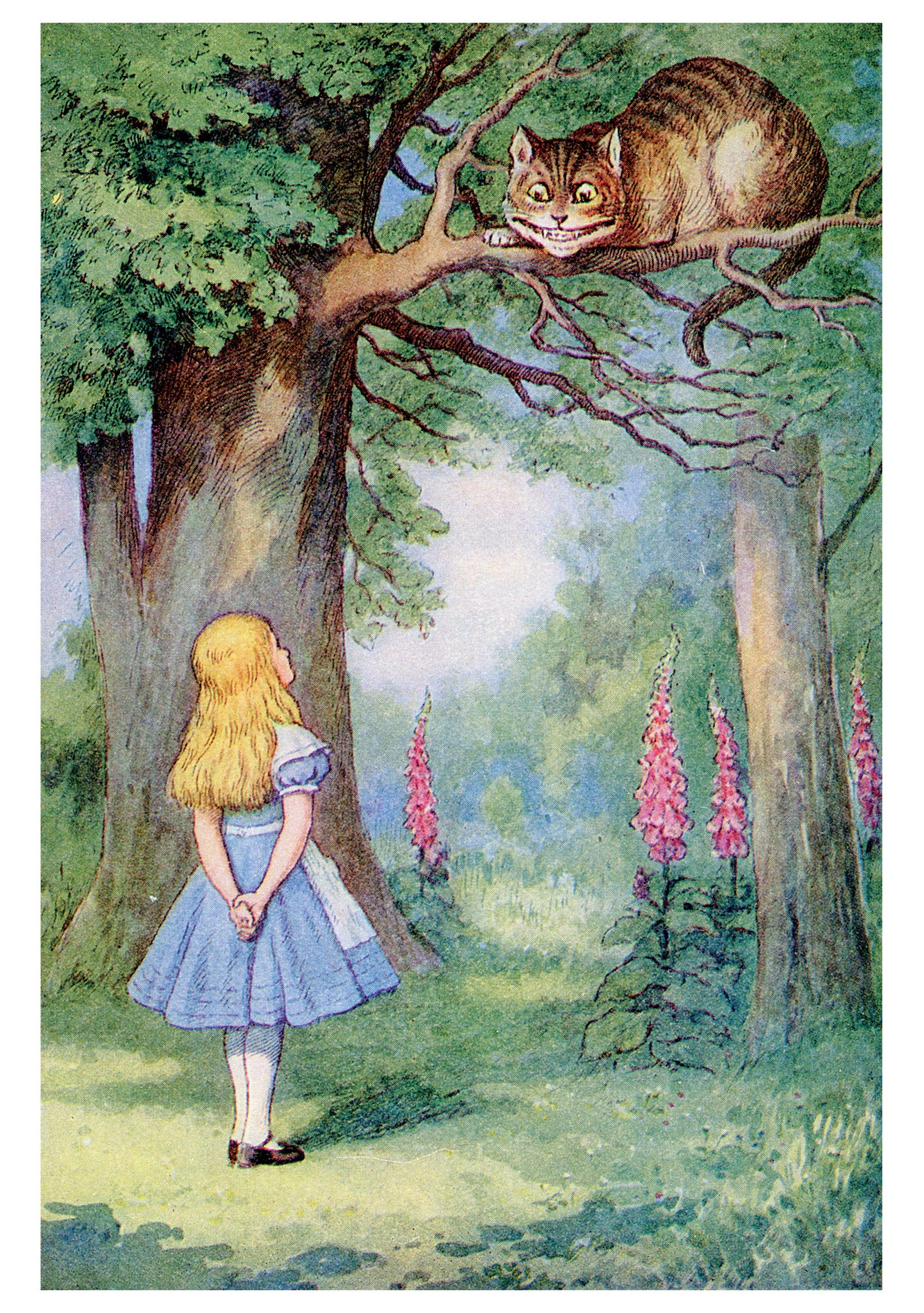
That grin—present without substance, meaningful without completeness—captures something about knowledge in an age of infinite information. The trick isn’t to chase every thread. It’s to enjoy the ones you catch, release the rest, and trust that the incomplete view might be exactly what you need.
The rabbit holes I didn’t explore fully this year will remain unexplored. The questions I didn’t find answers to will stay unanswered. And that’s fine.
Curiosity doesn’t require closure; the itch to inquire outranks any finished inventory of answers.
Sometimes the grin is enough.